Why do we use palm oil?
Oleon’s specialty lies in converting natural fats and oils into a wide range of oleochemical products and specialty oleochemicals. One of the raw materials Oleon sources is palm oil and its derivatives such as fatty acids. Palm is often used in our solutions destined for food, homecare, health & beauty, lubricants, industrials, paper, candles and more.
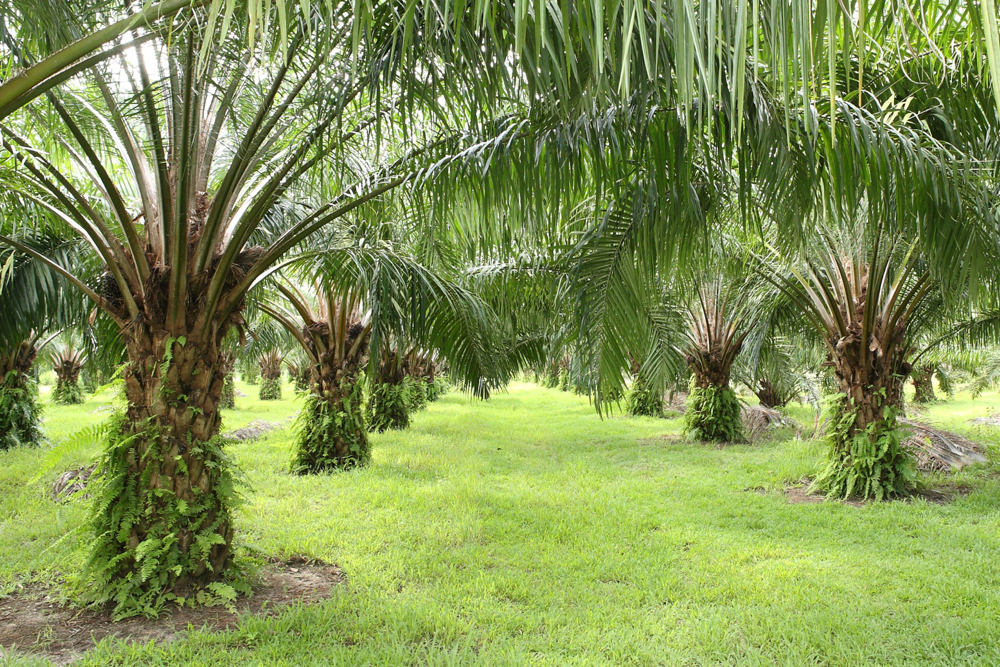
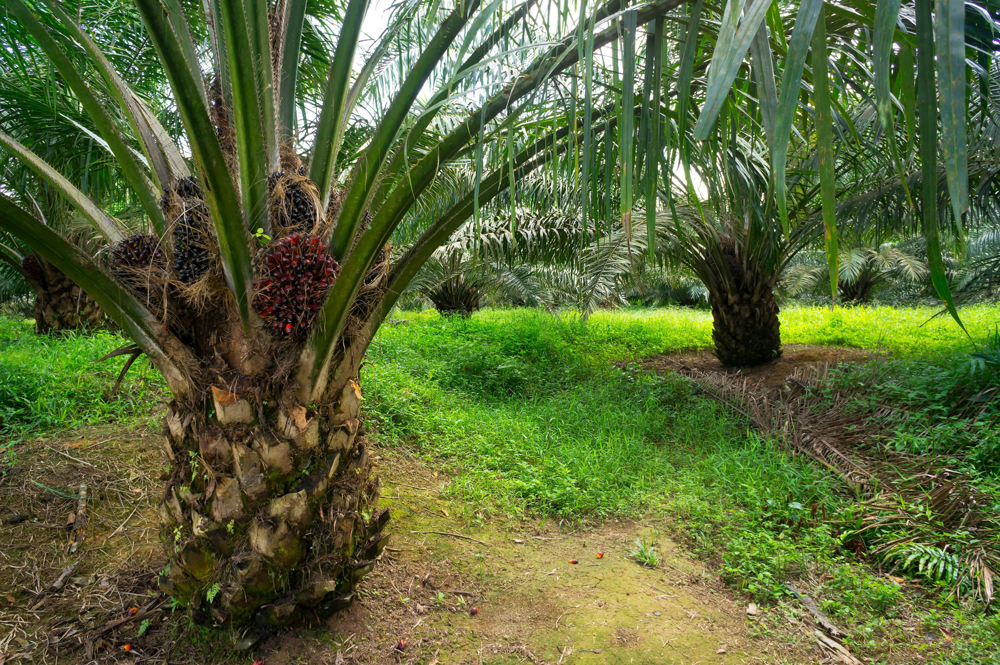
Compared to other oilseed crops, palm oil accounts for the smallest percentage of cultivated land for oils and fats, but produces the largest percentage of total output. Replacing palm oil with other types of vegetable oil (such as sunflower, soybean or rapeseed oil) would mean that much larger amounts of land would need to be used, since palm trees produce 4-10 times more oil than other crops per unit of cultivated land. This would result in serious environmental damage, with the risk that more forests would need to be converted into agricultural land.
Palm oil & deforestation
In some regions, oil palm cultivation has caused – and continues to cause – deforestation. This means that land, which was once predominantly covered by primary forest (forest that has never been touched by man) or which housed protected species and biodiversity, was cleared in order to be converted into palm oil plantations.
Likewise, some palm oil plantations were developed without consulting local communities over the use of their land. Some have been responsible for forcibly displacing people from their land. Violations of workers’ rights to fair payment and safe working conditions and other malpractices have also occurred.
Despite widely-reported malpractices in the industry, a growing number of players in the palm oil industry have committed to adopting more sustainable practices. The result of this gradual transition is an increasing amount of palm oil in our products that has been produced and sourced in a sustainable manner.
How does Oleon bring a positive impact?
Oleon is committed to protecting the environment, human rights in the workplace and in the communities where we do business. This commitment is shared with our shareholder the Avril Group who became a signatory of the UN Global Compact in 2017. As of 2018, Oleon and the Avril Group have translated this commitment into a Supplier Code of Conduct which sets out our requirements for supplying partners. This document gives an overview of the requirements that Oleon sets for our suppliers with regard to sustainability. All Oleon suppliers must sign this Code or have their own Code that is similar in content to ours. This is a requirement.
Since 2019, Oleon has been monitoring the sustainability of our suppliers through the online rating platform EcoVadis. Each supplier receives a questionnaire specific to their size and industry. They have to answer questions on the following topics: environment, working conditions, ethics and purchasing. The EcoVadis expert analyzes their answers and gives them a score out of 100. In case a supplier gets a low score (<45/100), they will set up an improvement plan together with the CSR team on both the short and long term. Our goal is that by 2026, 75% of our suppliers assessed by EcoVadis will have a silver medal (>53/100).
On top, when sourcing palm oil, we adhere to the Avril Group’s Sustainable Palm Policy. This Sustainable Palm Policy was launched in 2016 with the support of the NGO Earthworm Foundation.
The Group always strives to obtain its palm oil from suppliers who can prove that its cultivation does not contribute to the destruction of forests and peatlands, and respects the rights of workers and local communities. In order to achieve this ambition, Oleon puts a lot of effort in working together with its suppliers to contribute to the transformation of the palm oil industry.
Besides sharing values with our suppliers, Oleon is committed to full traceability to the mill and refinery and full transparency in the supply chain of the palm oil and palm oil derivatives we use. In 2020, we reached 100% traceability to mill for all palm volumes, 99.9% traceability to refinery for our palm oils and 70% for our derivatives.
To create a real positive impact on the livelihood of smallholders and the protection of the environment, Oleon supports different projects where various partners join forces. We are associated funder of the Riau Landscape project, and the Group iscontributor to the Aceh Landscape project in Indonesia, both led by Earthworm Foundation. Landscapes are places on Earth where we collaborate to protect and generate nature and improve people’s lives. We also participate to the Mariposa project of Olenex, in order to bring smallholders in Honduras to certification.
In case of grievances linked to our supply chain, Oleon has established its own grievance mechanism in partnership with Earthworm Foundation. For each incoming grievance case, Oleon will check the validity of the grievance, the link to its supply chain and make the decision if we will engage or suspend the oil palm company. If needed, suppliers whose practices are not aligned with our policy will be encouraged to gradually come into compliance. In accordance with our internal procedure for managing non-conformities, the Group may have to penalize any suppliers that do not cooperate or display any intention to change.
To strengthen our commitment to sustainable palm oil, the Group launched recently ambitious targets: we aim to have 100% of our physical palm stocks free from deforestation and ecosystem destruction by 2030, with an intermediate target of 100% certified stocks by 2025.
Oleon has been a member of the RSPO (Roundtable on Sustainable Palm Oil) since 2007. This is world’s most rigorous standard for sustainable palm oil. All our plants are RSPO certified.
All palm derived ingredients available on this Oleon Health & Beauty webshop are RSPO Mass Balanced certified. This means that these products are derived from sustainable palm oil that is mixed with ordinary palm oil throughout the supply chain. This is a first step towards 100% sustainable palm supplies. You can count on us to keep moving forward in the next years.
Want to know more about sustainable palm oil or you want to subscribe to the yearly webinar? Don't hesitate to contact our csr team at csr@oleon.com.
 |  |